
The Learning Process
“If you know the way broadly, you will see it in all things.”
- Miyamoto Musashi
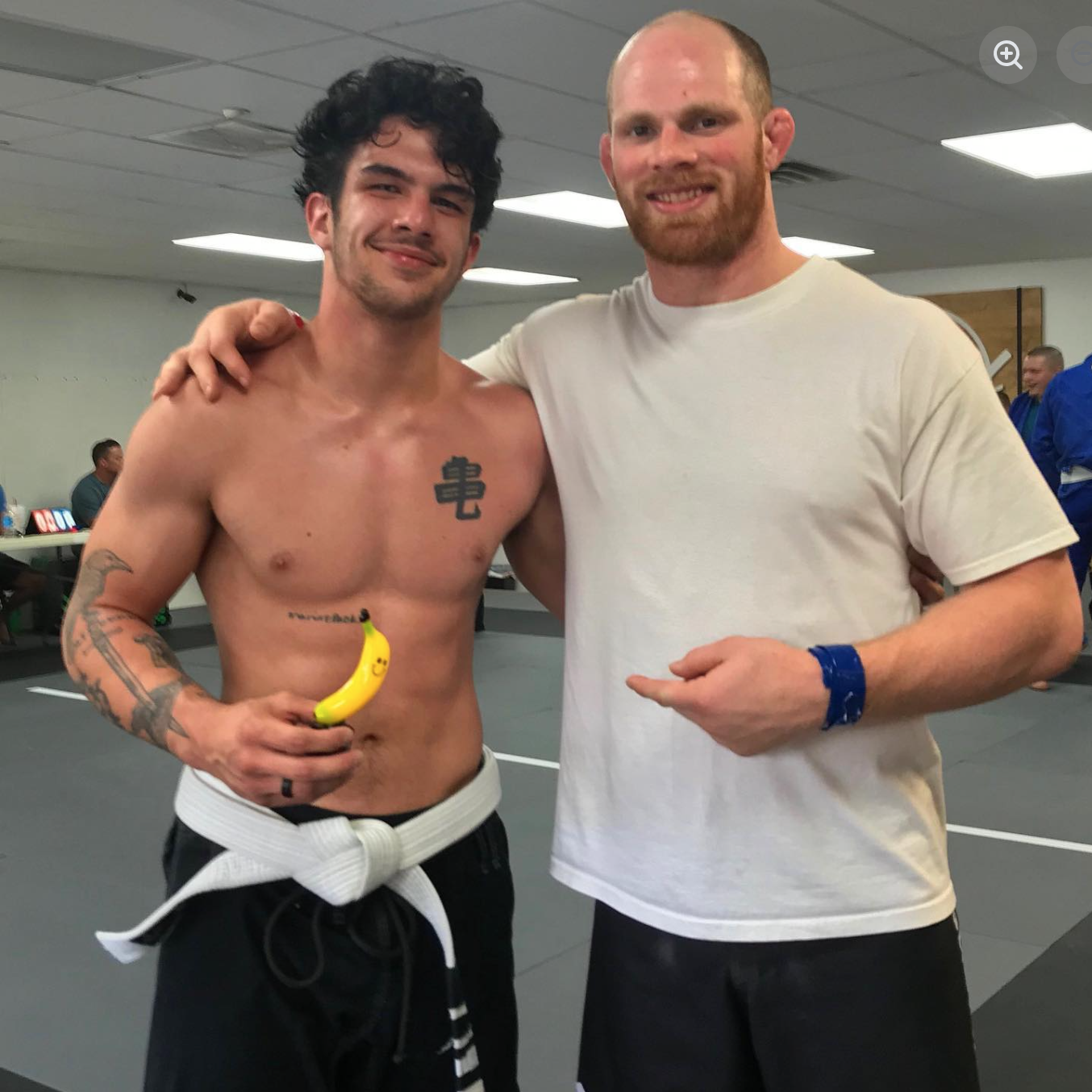
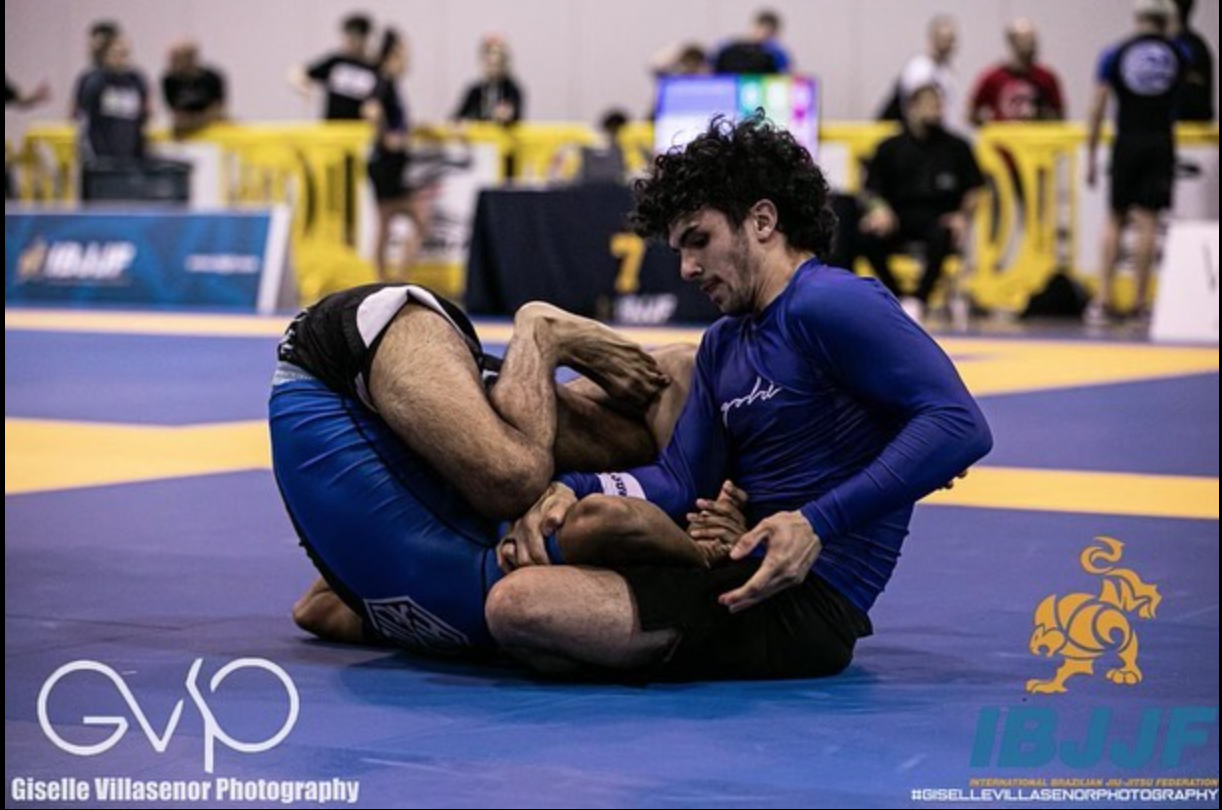
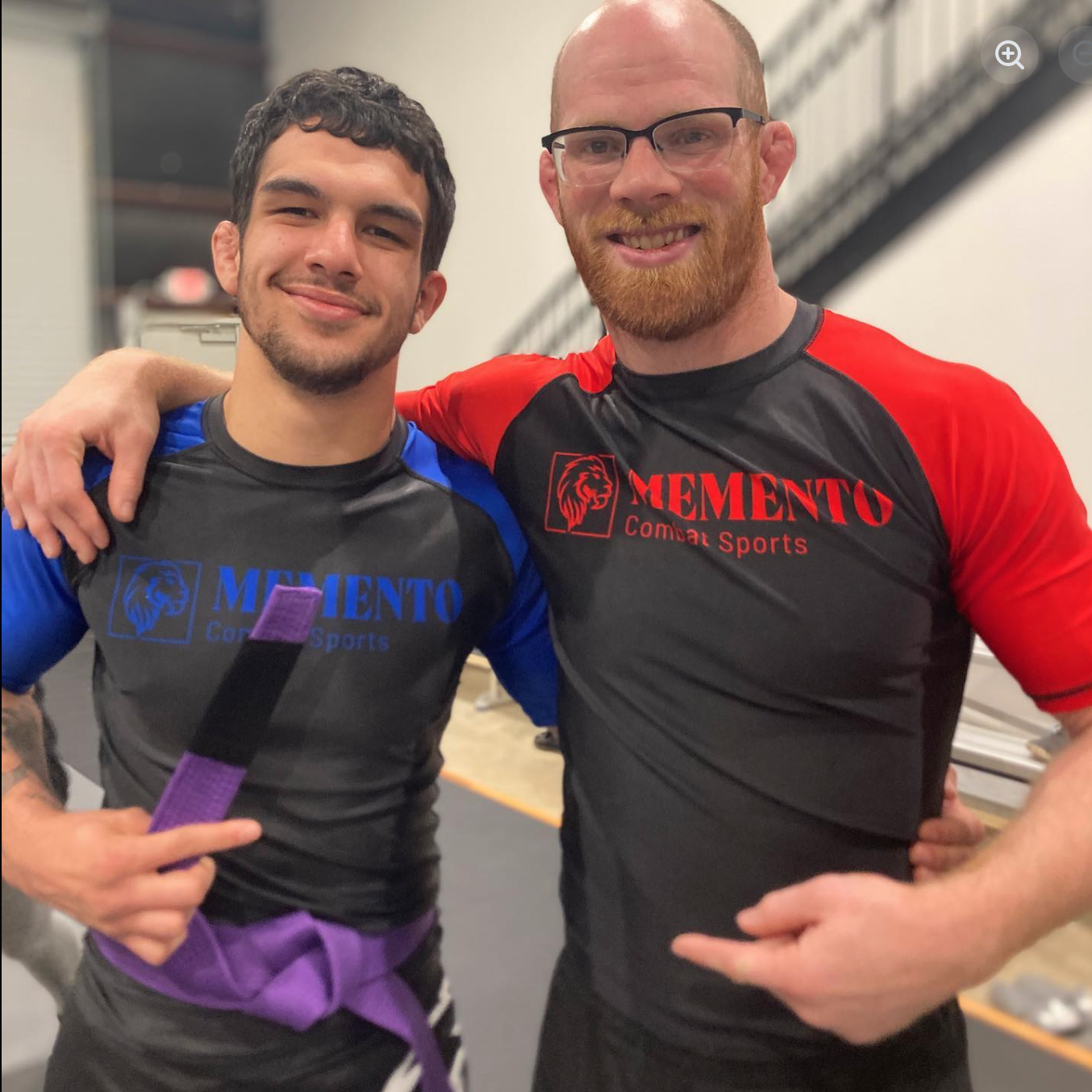
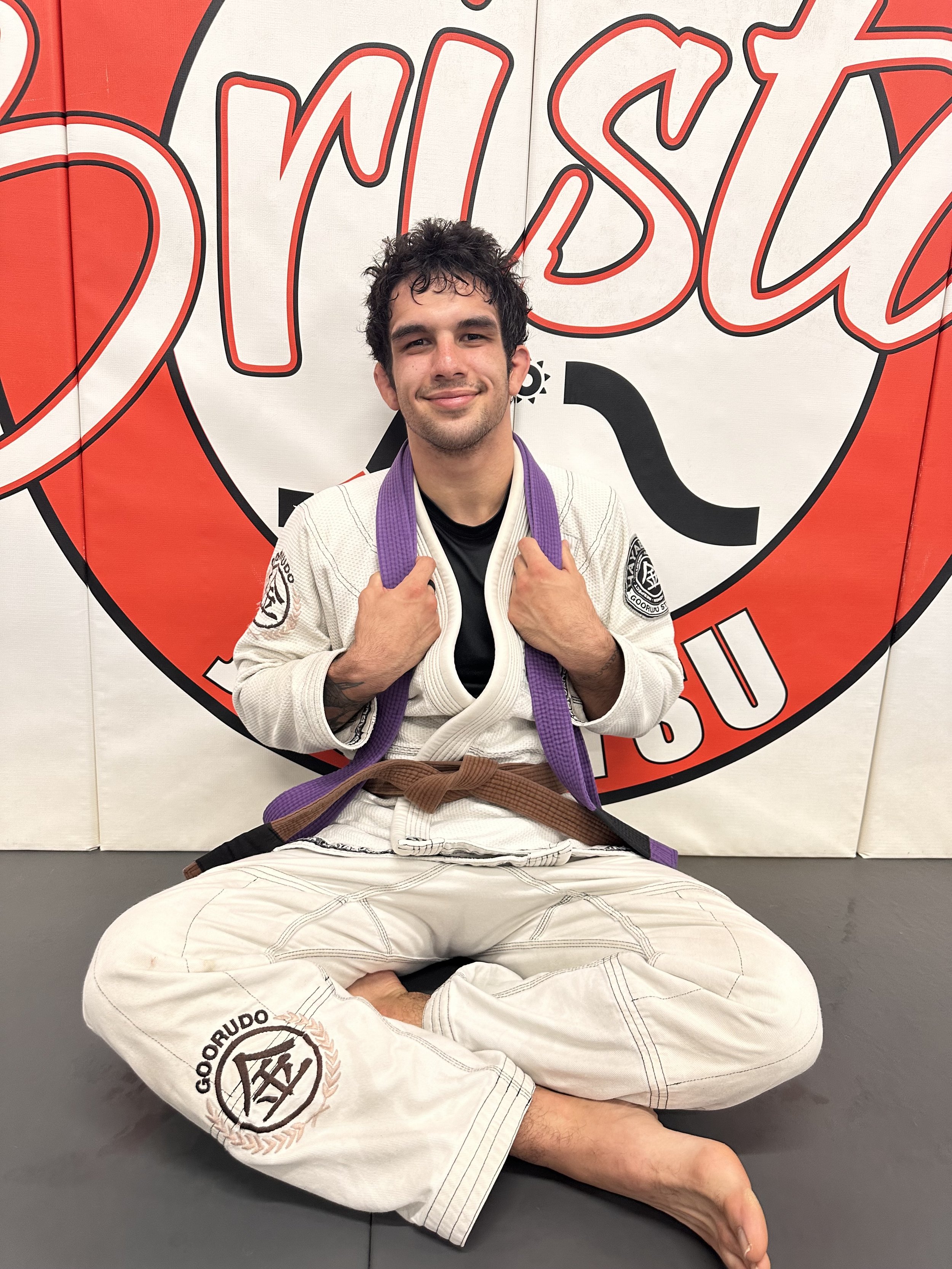
(2019) White Belt (2020) Blue Belt (2022) Purple Belt (2024) Brown Belt
In this article, I will attempt to lay out the Learning Process, not only as it applies to Jiu-Jitsu, but as it applies to all skills, both motor and mental, within our lives. I’ve learned a lot about learning itself in my 7 years of training. Here’s what I know so far.
Note this is a longer article. Get your popcorn ready.
Doors and Falling on My Face
I will start with two examples, which will encompass all of what we will talk about in this article.
Have you ever walked into a gas station and pushed on a ‘pull’ door? Surely if you’re like me, and there are others around, you feel like a complete idiot. Upon your initial failure to open the door correctly, you then pull it open as you are flushed with embarrassment.
When you first learned how to walk as a child (do your best to remember), how many times did you fall on your face? How many times did infant you get fed up with falling and throw in the towel just to never walk again?
Both of these examples are correlated in some form or fashion to the Learning Process as a whole. Let’s dive in
Johnny Pencilneck and the Learning Process
We have all experienced the complete and utter shame of trying to push a ‘pull’ door. Within that experience, we make an unconscious action of pattern recognition that leads to a behavior change. It can be broken down like so:
Push the Door → Fail → Embarrassment → Behavior Change → Pull the Door → Success
This is how all behavior changes and pattern recognition works. We act with the general goal of success. When this action is met with failure, there is, generally, a negative emotion that follows to facilitate a change in behavior leading towards the proper action.
Why am I talking about doors in a Jiu-Jitsu article? Because how we do anything is how we do everything. Let’s apply this mode of pattern recognition to your average round in Jiu-Jitsu:
I Play Guard → My Guard Gets Passed → I Get Submitted → I Cry About It
At face value, this is where most practitioners will stop within the Learning Process. But taking what we know, we are still missing a very key step that leads to success: BEHAVIOR CHANGE.
What separates someone who learns quickly from someone who feels stuck in a plateau? How is it that Johnny Pencilneck started way after I did, but he got his Blue Belt faster than me? How is it that Jimmy Twinkletoes trains way less than me but is consistently beating me up? Let’s use another analogy to teach this lesson.
As a child, I was really thirsty, and my parents weren’t home. I couldn’t reach the sink or any other source of liquid. So, in my desperation, I looked under the sink and found a container with blue liquid in it. Jackpot! It even has a little spray trigger so it can go right in my mouth and satiate my parched mouth. Child-me didn’t know what dish cleaner was, and from that day on, I never drank a blue liquid, thinking it had to have been water.
You see, I immediately learned from that horrible letdown, not to perform that behavior again, and not go forward with the behavior and idea, “All liquids that are blue are good to drink”.
So let’s go back to Johnny Pencilneck and how he views getting his guard passed.
Johnny Plays Guard → Johnny’s Guard Gets Passed → Johnny Gets Submitted → Johnny Cries About It → (Johnny Doesn’t Want to Get Guard Passed Again → Johnny Changes Behavior → Johnny Retains his Guard Next Time)
It is not that Johnny is better than you or me; he just has a couple of extra steps within his process. The negative emotion he feels is a teacher and a guide. He doesn’t like the feeling of getting his guard passed, so he changes his behavior so as not to feel this emotion again.
Here’s the secret: THE LEARNING PROCESS IS USING FRUSTRATION AND FAILURE TO TEACH US TO CHANGE
The Burden of Consciousness
One of the most fascinating things to me, as a new father, is my daughter’s complete and utter lack of consciousness and thought. She literally just exists, and that’s it.
As she grows older, one of the things I look forward to most is her learning how to walk.
I can’t speak in absolutes (only a Sith deals in those), but I would wager to say we all learned to walk despite falling over and over. Not one person I know still crawls around like a baby because “I just got tired of falling over and thought it wasn’t worth it.” Why is this? Because an infant doesn’t have consciousness, the ability to feel embarrassed at failure, or even a concept of what failure is.
As adults, how many times have we given up on something or been discouraged because of apparent failures? Unfortunately, with the gain of consciousness and free thought, we are also burdened with its negative consequences: shame, frustration, and sadness. Whereas when we were little children, we would simply fall and get back up to try again. Why did we do this? We didn’t even know why! Just for love of the game, I suppose. But now, as adults, if we fall, we are conscious of this fall and what it perhaps means socially and individually. Now, when we fall or make a mistake, there is a negative thought attributed to this event that will either lead us down one of two paths.
Giving up on the endeavor completely so as not to feel that way again
Continue forward with adapted behavior so as not to feel that way again
We ought to take notes from toddlers learning how to walk. When we fall in our endeavors, we should aim to get back up, using the negative emotions we experience to facilitate a behavior change so that it doesn’t happen again.
Use Your Head!
Let’s go back to Johnny Pencilneck and me, place them in the same situation, and see how this process unfolds.
Me and Johnny Pencilneck both roll with a young gun.
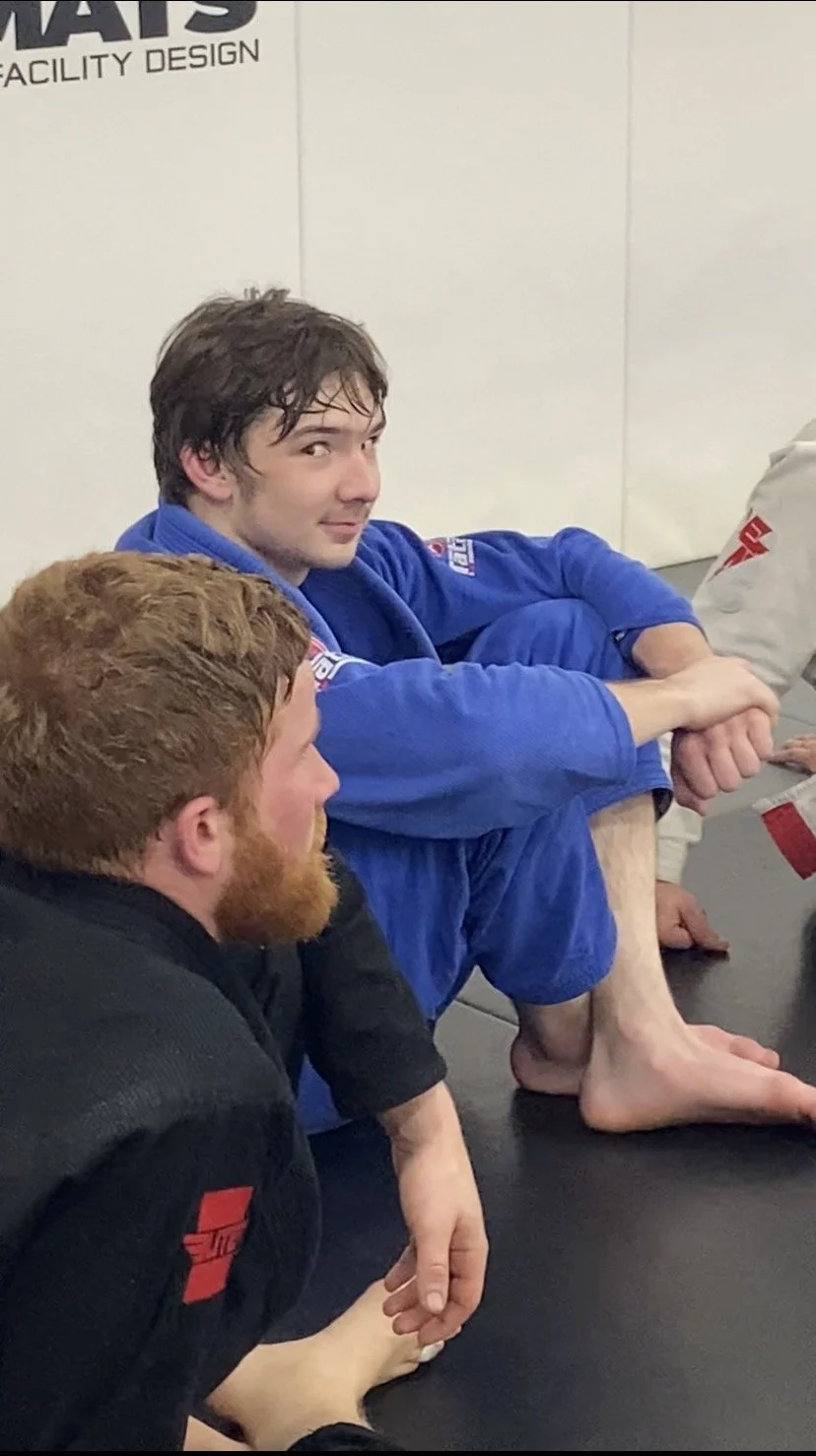
You stand toe to toe with a young man who is ready to gun you down despite your age, weight, rank, or political stance. A true cutthroat of an individual. Let’s see how we fare.
Rolls with 16-year-old killer → Gets swept → Gets Mounted and Submitted
We both experienced the same scenario with the same person. How could our responses differ?
Johnny Pencilneck Gets Frustrated → Tries to Figure Out What He Got Swept With → Brainstorms and Ponders on How to Avoid It → Rolls with the 16 y/o Next Class → Experiments to See if He Can Do Better
I Get Frustrated → Well, he’s a 16-year-old killer, and I’m not → I won’t roll with him because he’ll beat me → Excuses made → Zero Improvement Made
We both experienced the same situation, but both had vastly different outcomes as a result. How often do we take the control out of our hands and just place excuses in the way of our own development? I know I do all the time, especially with the said young gun shown in the picture.
In this scenario, Johnny uses his frustration to learn more about where he went wrong (in this instance, he was swept). He uses his critical thinking to brainstorm a way to not allow this to happen again, and then tests his hypothesis on that same opponent to see if it would work. If it doesn’t, he repeats this process over and over again until it brings about proper behavior change.
On the other hand, in this scenario, I chose to just chalk it up to something outside of my control and shirk away from the Learning Process. The excuse is, “He’s a young guy, and I’m not. Oh well!” The reality of the excuse is, “I don’t want to roll with him again and lose.” Thanks Ranger.
I cannot stress enough the importance of free thought and critical thinking regarding learning, especially in Jiu-Jitsu. We must be able to think for ourselves and problem-solve as individuals. Without it, we are simply a machine with no learning capability. We are, going back to my example, spraying Lysol in our mouths, wondering why it doesn’t taste like water.
Complex vs Complicated Problems
To me, the coolest part about Jiu-Jitsu is that you’ll never really understand it. It’s a sport of problem-solving. It’s also a sport with an infinite amount of problems that are always presenting themselves. The moment you feel like you have an answer, someone else presents another problem that we now have to solve. I’ve always likened Jiu-Jitsu to a never-ending game of whack-a-mole.
As people, we want definitive answers to our problems. And the world is full of answers. Some things cannot be answered so easily or concretely. There are two general types of problems we will face in our life.
A complicated problem is a problem where the solution is definitive. You have a leak in your sink and have to do a lot of work to it, but in the end, it is still a solvable problem.
A complex problem is a problem where there is no real solution and human free will is involved. My marriage cannot be solved, but there are habits and behaviors I can enact to, hopefully, keep my beautiful wife happy (I succeed most of the time).
Jiu-Jitsu, our Faith, Marriage, Raising Children, and Cultivating Friendships are all examples of complex problems that have no concrete solution. There are things we can do to move them along, but we can never say “I solved my marriage!” like we can say “I fixed the sink!”
I think a majority of our frustrations within Jiu-Jitsu are from a misdiagnosis. We think that Jiu-Jitsu is made up of a bunch of complicated problems that have a definitive solution. When in reality, we are dealing with a human opponent who has free will to make choices, and we must respond to these choices. We can perhaps determine beforehand what decisions they may make, but we can never be certain. When we change our mental mode of thinking from Complicated to Complex Problem Solving, our lives will get a lot easier, and our learning will be a lot faster.
Let me provide an example.
Billy does a knee cut on John and is stopped by Reverse De La Riva
Billy drills getting out of Reverse De La Riva
Billy does a knee cut on James and is stopped by Deep Half Guard
In this scenario, Billy does the same initial move to two different opponents, and both opponents respond in two totally different ways. So does Billy have to drill every possible reaction he will face when doing a knee cut in order to successfully execute the move? I theorize not so.
Ruffling Feathers
So now we are on the subject of drilling. To start off, I do think drilling is important for initial skill acquisition. If you don’t know how to position your body in a knee cut properly, you’ll never be able to do it. However, I am a firm believer that drilling for thousands of reps with no resistance is a complete waste of time. What! This is Heresy! Allow me to make my case.
When we are doing Jiu-Jitsu, what are we ultimately drilling and problem-solving for? Sparring. So when we are sparring, are we doing so with or without resistance? With resistance. So why then would we spend the majority of our time without resistance? Probably because that’s what we’ve been told is the right thing to do. I’m going to go on a long rant here, so bear with me.
When you pushed the ‘pull’ door. Did you have to sit there and drill the right reaction of pulling the door for 100 reps while everyone else is standing there behind you, wondering what kind of drugs you’re on? No, you simply pulled the door.
When you did your knee cut in sparring, and it was stopped by a given reaction. Do you sit there and drill the knee cut for 1,000 more reps so that it doesn’t happen again? Or do you simply brainstorm how to deal with that reaction under resistance?
Drilling is important for skill acquisition, and resistance is important for skill application. You cannot apply a skill meant for a resisting opponent on someone who is about as resistant as a sack of potatoes.
Which scenario seems to be the most efficient edeavor?:
Do 100 Knee Cut Reps → Knee Cut in Sparring → Hindered by Given Reaction → Do 100 More Knee Cuts
OR
Understand the Knee Cut → Knee Cut in Sparring → Hindered by Given Reaction → Spend Time in Position to Understand Reactions Given With Resistance → Brainstorm Answers to Reactions
I’m not saying that one is right and the other is wrong. I’m just saying which one I am more partial towards. Some will say I’m an idiot, and some will agree with me. That’s the cool part about Jiu-Jitsu. Everyone learns in different ways; it’s just important to know in what way we learn best.
Jack of All Trades / Master of Some
Wait a minute, so are you telling me I have to do this for every single position for all of Jiu-Jitsu? Absolutely not! If that were so, I would never train in Jiu-Jitsu. To get good at Jiu-Jitsu, we have already discussed the Learning Process, Behavior Change, Critical Thinking, and Skill Application. But now the question arises, what do I train? Here I will lay out a key concept for getting good at Jiu-Jitsu:
To be good at Jiu-Jitsu, you have to know a little bit about all the positions, and a lot about a couple of positions.
(Defense) You need to know a little bit about all the positions so you can recognize where you are and what you need to know defensively to mitigate the attacks you’ll face
(Offense) You need to know a lot about a couple of positions so you can place yourself in those positions and gain a winning advantage over your opponent.
So we needn’t stress about learning the intricacies of every single position Jiu-Jitsu has to offer. But we do need to have focus on learning the intricacies of OUR positions in Jiu-Jitsu.
I have my own personal positions that I am aiming to get to within the game of Jiu-Jitsu. Because when I get to these given positions, I know my likelihood of winning goes up significantly as I know more about that position than my opponent. This also gives me a concrete objective to focus on. Now, no matter what crazy spot or situation I’m in, I know generally where I am aiming to get to. However, I will inevitably find myself in situations where my knowledge is limited. In these situations, I need to know just enough to stay safe, stabilize myself, and have avenues of escape so I can get to my favored positions. Don’t take it from me, hear it from John Danaher, the most influencial Jiu-Jitsu coach of our time (and also the most esoteric)
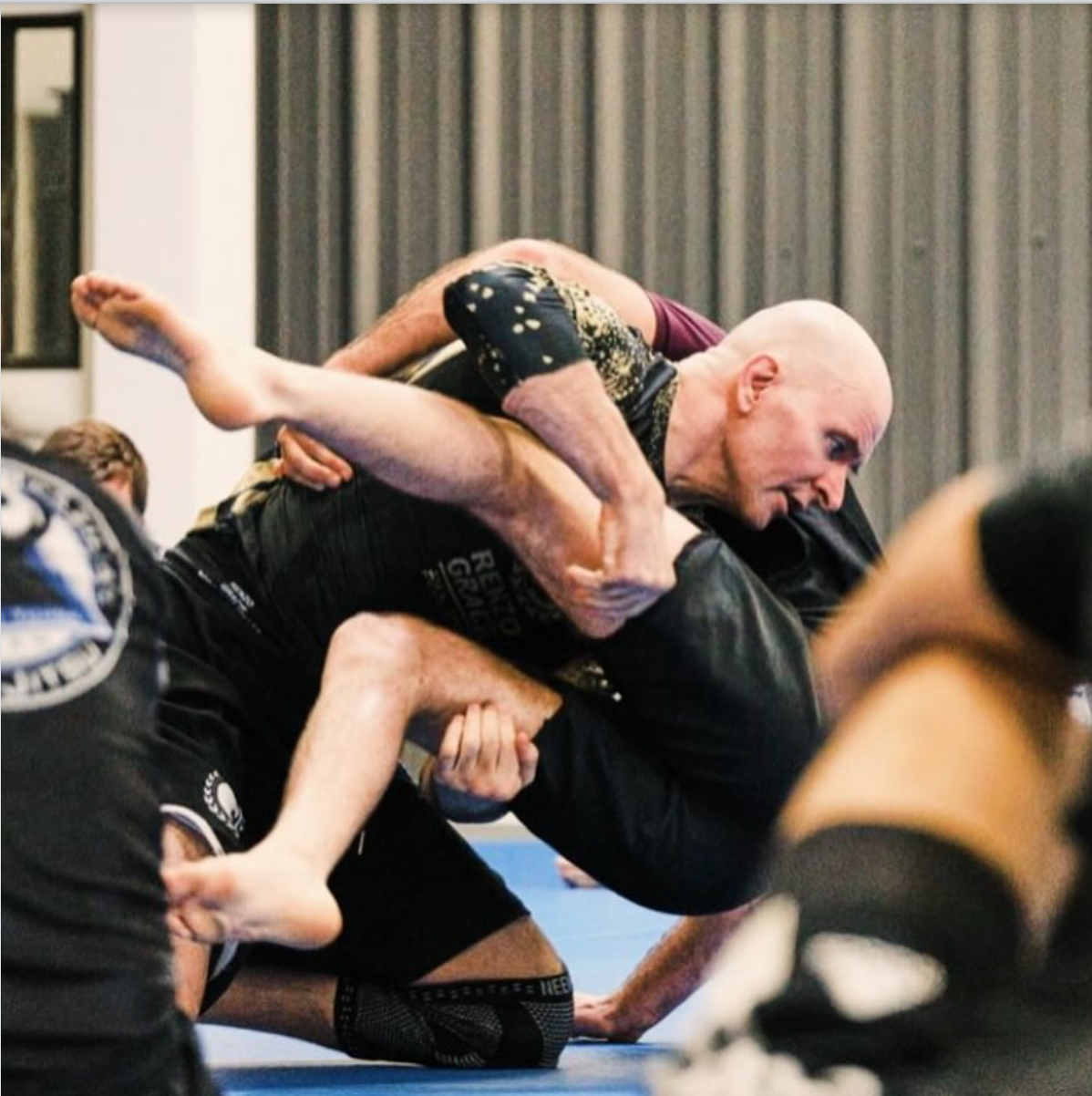
Specialist in offense - Generalist in defense
“When it comes to defense in Jiu jitsu, a little knowledge goes a long way. As long as you can see danger emerging, you can start your defensive protocols before the danger becomes too great and get to safety fairly easily. Offense is a very different thing. Then it’s better to limit yourself to just a few moves and build very extensive and deep knowledge around them, much deeper than your opponents knowledge of how to defend them. So build breadth of knowledge across many moves for defense and depth of knowledge among a few moves for offense to build a strong overall Jiu Jitsu game.”
This makes the almost insurmountable task of learning Jiu-Jitsu much easier, but it takes time for you to discover your favored positions. I am of the opinion that your personality dictates what game you will end up favoring (I’ll write a separate article on this at a later date). When you are first beginning your Jiu-Jitsu journey, learn a little bit about everything. As you gain experience, note what positions you naturally frequent and where you find the most success. These are your positions. Now, take those positions to a whole new level of understanding. This is the belt ranking system in a nutshell, if we really break it down.
White Belt - Survive
Blue Belt - Learn a little bit about all of it
Purple Belt - Find your positions
Brown Belt - Refine your positions
Black Belt - Do it all over again
The Bottom Line
Learning Jiu-Jitsu is very frustrating
Frustration is our greatest teacher
Use critical thinking to work through your problems with frustration as the fuel
Know what kind of learner you are, and what kind of problems you are facing
Understand a little bit about all of it
Know a little bit more than everyone else
