
A Coach’s Guide to the Kids Classes (pt. 1)
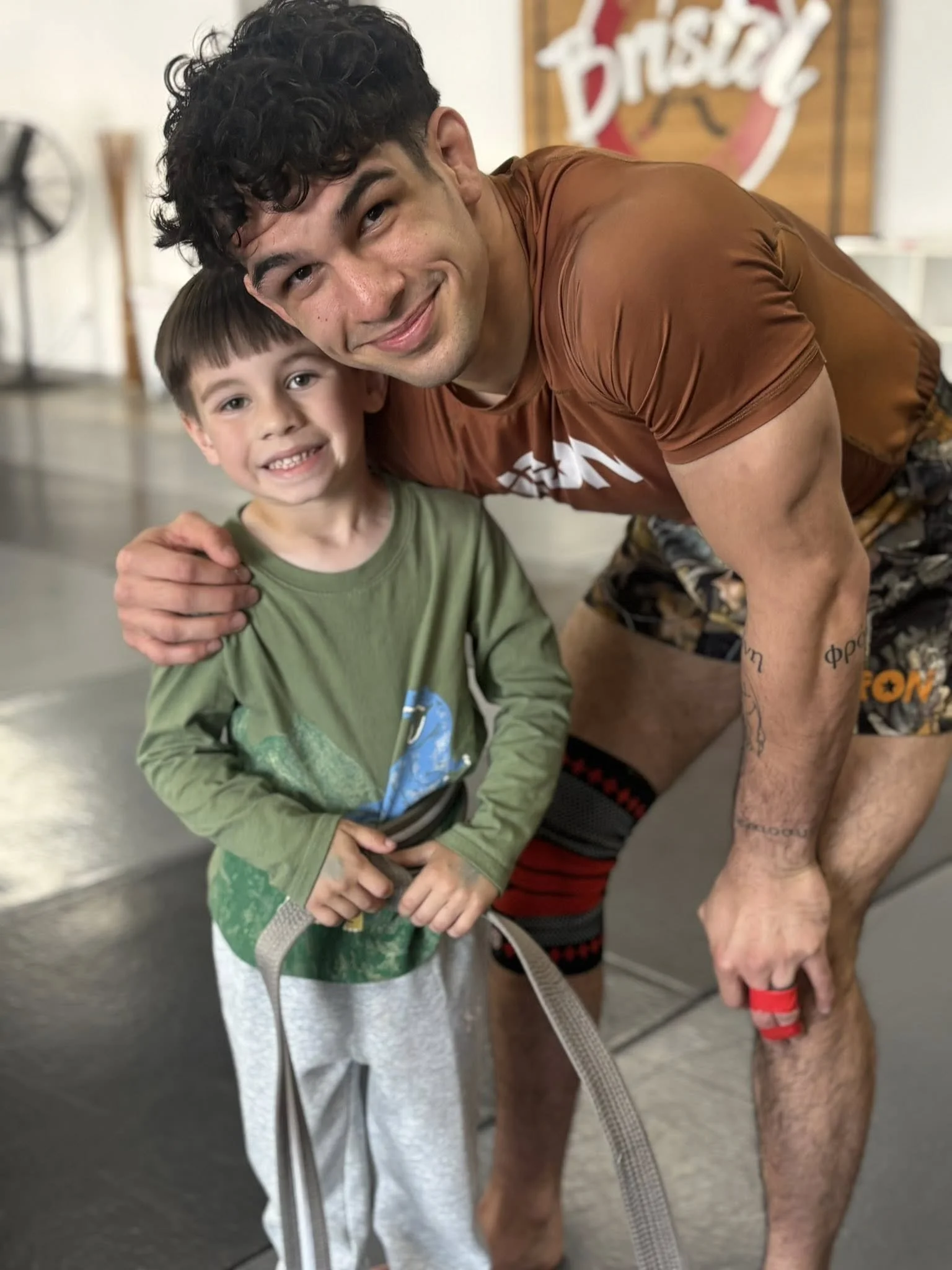
Teaching a Kids Class can be either the most rewarding part of your day, or the most dreaded part. It all depends on how you approach it, and what tools you have for your approach.
There is one aspect of Jiu-Jitsu that everyone fears, even the most skilled World Champions and accomplished athletes: the dreaded kids class. Teaching children is not for the faint of heart. It can very easily be the most chaotic and frustrating part of your whole day. However, if done properly, teaching the kids class can be the most rewarding and fruitful endeavor one can ever partake in. Just like Jiu-Jitsu, there are certain strategies, techniques, and tools needed to control the chaos leading to the desired outcome. In this new series, I will be listing out all the techniques I have learned in my 11 years of teaching kids classes in various martial arts. With these tools your kids class will go from a chaotic mess, a poor attempt at a day care, to an actual martial arts facility that instills discipline and structure. Let’s dive in.
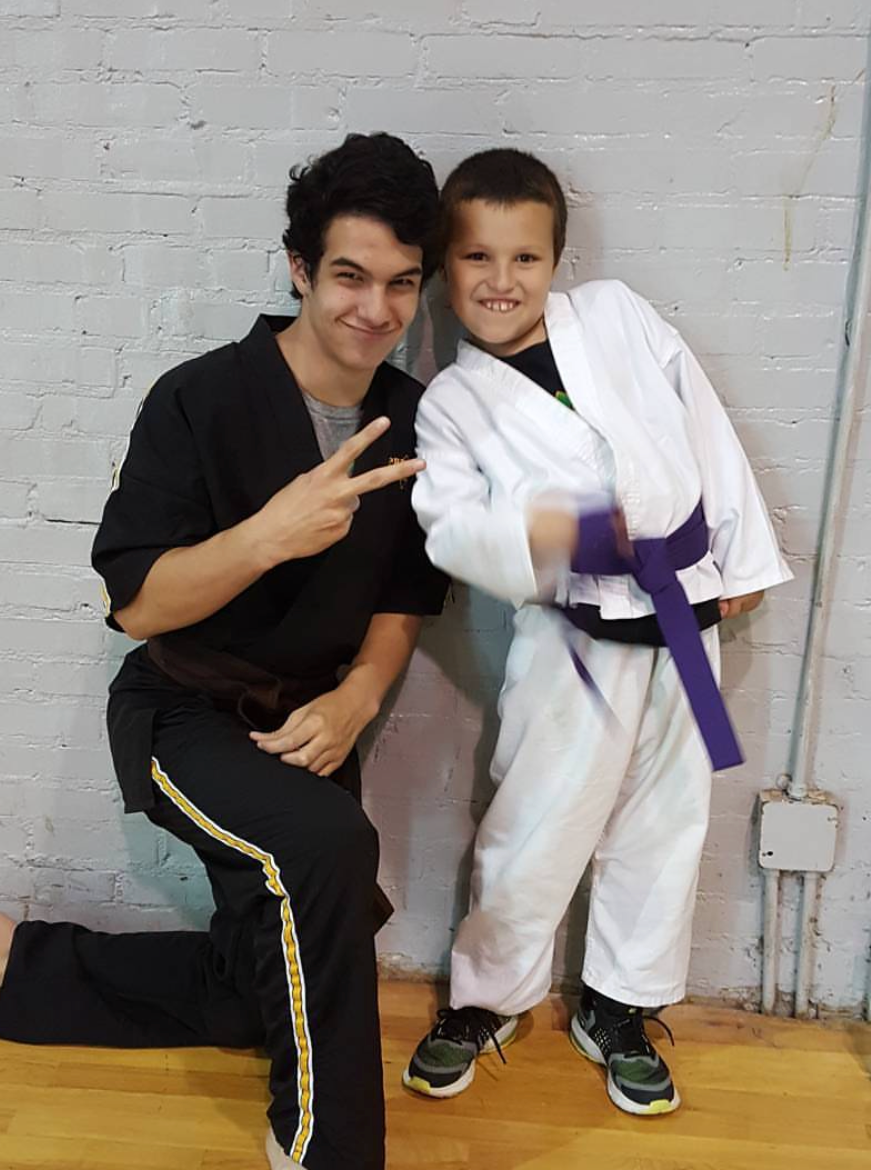
I started teaching martial arts at 15 years old. I had no clue what I was getting into or that it would be my calling. I just wanted to help out.
Throughout the many years, I have taught some of the worst kids’ classes ever. Through my constant mistakes and fantastic mentors, I learned a lot about what it takes to actually be a good kids instructor. Knowing martial arts is actually the least important part of it all. The most important skills are hidden.
#1: “Do Not Let Your Children Do Anything That Would Make You Dislike Them”
- Jordan Peterson: 12 Rules for Life (Rule 5)
There is no other rule that is more important to the integrity of your class than this one: you must have standards, and adhere religiously to those standards. Without standards, there is no structure. Kids without structure are chaotic and frustrating. Kids with structure are beautiful, and quite hilarious. Now, to say, “Have standards” is a very broad saying. Let’s provide an even more specific idea, an idea I completely stole from Jordan Peterson: “Do Not Let Your Children Do Anything That Would Make You Dislike Them.”
This is probably the simplest metric for standards I’ve come across. Anything a child does, within class, that gets under your skin, makes you cringe, or is flat out just wrong, should be addressed, and a standard should be set. You may not know what your standards are at this current moment. Easy, a kid does something you don’t like? You now have a standard to set.
Now, don’t take this and run with it to an authoritarian level. Kids still need to be kids. The goal of an instructor is to let kids be kids while simultaneously having them be pseudo-adults as well. Kids are fantastic, smart, funny, and have extreme amounts of ingenuity. They are also chaotic, annoying, irksome, and cringey. Our goal as coaches is to limit the behavior that will cause trouble in their adolescence and adulthood, while cultivating the behavior that makes kids so awesome.
A couple of standards I have in my classes: don’t talk when I’m talking, sit criss-cross (jiu-jitsu sauce) so I know you’re focused, if you have a question then raise your hand, don’t scream or make weird noises, don’t distract the person next to you, try your best, and have fun.
I know some people who have more stringent standards within their gym. I think there’s a time and a place for all standards, but sometimes they can be inhibitors to a child’s success. I also know some people who have way more lenient standards, and their kids’ class is in shambles because of it. The goal with standards is to have a balance.
The most important part about standards is YOU MUST ADHERE TO THEM ALWAYS. If you tell a child they have to raise their hand to talk, and they blurt out in class and you don’t correct them, then you have failed at setting standards. Children don’t listen to words; they listen to attention and action. If I tell a kid not to do something, and when they do it, they get no repercussions, I have inherently told them their behavior is okay. So if you set a standard, be ready to hold to it for the remainder of your teaching. If you set a standard and don’t adhere to it, you will lose the validity and authority as the adult in the room. So be smart about your standards, don’t set something you can’t adhere to, or something that will hinder a child from being a child.
#2: Three Points of Contact
We’ve all heard the saying, “Nobody cares about how much you know until they know how much you care,” and this is a very true adage, but how do we let people know we care? There’s a simple three-step system even the most socially awkward can follow.
When I first started teaching I literally could not talk to people, much less children. I had almost no social skills, and through teaching, I’ve learned the majority of my social skills and public speaking techniques. When I first started, my instructor at the time saw how absolutely useless I was. I would never talk to kids or parents and would stay very quiet by myself. He gave me a simple system I had to do every day with every single person I saw.
Use their name (Don’t know it? Ask)
Give them a fist bump or high five
Make eye contact
(Optional) Make a comment
I still use this system every single day (thank you Parker).
What’s everyone’s favorite word? Their name. Everyone craves physical contact in some established way, the most appropriate of which is a fist bump. People want to feel seen, so make eye contact. People want to feel important, so talk about them. The fourth step is optional, but it’s a gold mine. A kid cares if you remember some aspect or fact about them. They weren’t at class last week? When you see them next time, ask them what was going on. They went on vacation last week? Ask how it went. Even better if you can somehow use it within the class itself, then the child will really feel seen and cared about.
Do the same thing with parents, as they are the main customers. You serve the kids, but without the parents, there would be no kids. So, approach all the parents the same way. Make acquaintance with them and learn about them.
I know some given facts about every person who walks onto my mats. Even if it’s their first day. It could be something surface-level at first (their name, t-shirt, their shoes, etc.), but over time you start to build that connection with that student. That connection builds over time, and they start to think you really do care about them. And here’s the kicker: YOU DO CARE ABOUT THEM. If you don’t, you shouldn’t be teaching the kids’ class.
Example of how the relationship grows:
Riley is wearing a nice jacket → Says his favorite superhero is on it → Reference that superhero in class
Riley comes in, and Dad says he’s got a dirt bike race coming up → Reference it in class → Text parent to ask how the race went → Riley comes back, and you make a statement about it
Within two days, we learned that Riley has a nice jacket, a favorite superhero, and likes dirt biking. We’ve not only included these facts in class and shown interest in him, but we’ve even extended it to the family to show we genuinely care about the kid.
Don’t know how to get started? Name, Fist Bump, Eye Contact.
#3: Highlight the Good, Not The Bad
Bad behavior is the plight of the kids class. It’s what all instructors fear, and when it runs rampant, it ruins the kids program as a whole. Behavioral issues are one of the primary things parents are looking to fix whenever they put their kid into class. So it’s up to us to figure out how to handle such events. The best way to handle bad behavior, is to nip it at the bud through the establishment of Standards (see #1). But let’s say you still have a student who is acting correctly in class. The best way to handle it, is to use guerrilla warfare and sneaky psychological tactics.
Let me start off by saying I am a college dropout, so I’m not going to act like I’m learned on the ins-and-outs of psychology. But I have taken a Psychology course twice (having failed the first one). One of the best things I learned within that class was the idea of Attention as the Currecy of Children.
Children don’t really want money like we do. Place 100$ in front of us to do something and our mind starts racing on what we can do with it. Place 100$ in front of a child, and they probably will get excited, but not in the same way. What is most valuable to a child is attention. Here’s the kicker: it doesn’t matter if its good attention or bad attention, they want it either way. Our goal as teachers is to basically train children to crave and desire good attention, not bad attention.
Here’s a common mistake a lot of people make when they teach the kids class.
Johnny isn’t sitting with his legs crossed (standard) → You call him out to fix his posture → He does so → .5 seconds later he does it again → You call him out to fix his stance → This happens 10 times in the span of 1 minute
Within this example we are attempting to correct unwanted behavior by giving it attention. Once a child learns they get attention from the Big Dog (you), by doing something wrong, they’ll seek to keep doing it. Why? Because they want attention. They also want to see what gives them attention. Perhaps at home the only time mom or dad pays any attention to them at all is when they are off the chain chaotic. Well, you’re not mom and dad, and that isn’t gonna fly in your class. Want your parents to make comments to you saying, “Man, Johnny acts so good when he’s here but at home he doesn’t act this way!”? This is the secret sauce to getting the behavior you want.
Let’s look at the alternative:
Johnny isn’t sitting the right way → Jimmy is sitting the correct way right next to him → You compliment Jimmy on his stance, drawing everyone’s attention to him → Johnny fixes his stance → You compliment Johnny for doing a great job
Children are smart. In this example Johnny recognizes that someone else got attention and not him. He sees that in order to get attention he has to do the right thing. In doing so, YOU MUST compliment his good behavior to reinforce that idea of: you do good things, you get attention. Think of it like a Pavlovian response. They do X, they get Y. Everytime without fail. If they don’t get Y, they don’t do X.
I will make an important note here to finish off. If your standards are set, and everyone adheres to them, then there should be little to no lapse in them. A new kid comes in and sees everyone sitting with their legs crossed, then they’ll follow suit. You compliment them once, and then boom the standard is set. The hard part is setting standards initially. It is hard, but it pays off big time in the end.
The Bottom Line
Kids classes are the most rewarding classes if you have the tools and knowledge needed to do them effectively. Without tools, you can’t fix the problems that will inevitably arise.
In this series, I’ll be expanding on all the various techniques and tools I’ve learned in my decade of teaching kids martial arts. I hope it helps you.
In Summary:
Set standards and vehemently adhere to them. Let kids be kids, but don’t let them do things that you don’t like.
Show them that you care. Make your 3 points of contact initially, and build your relationship with each student over time
Understand that attention is currency. The attention you give is the behavior you get. Only give good attention to good behavior.
