
Music Theory and Tempo
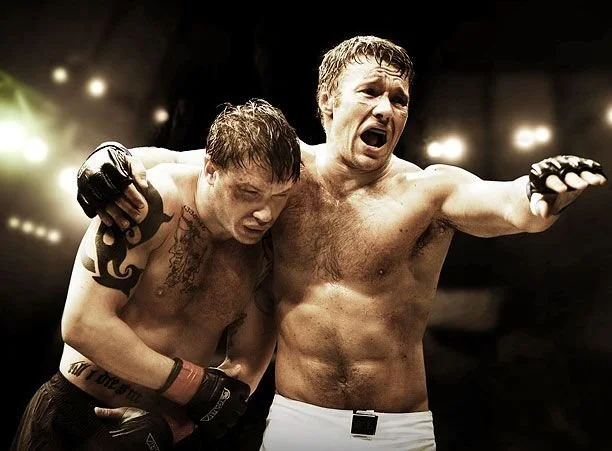
You gotta relax and stay calm in there. The cage is your home. You set the pace. You set the rhythm. Feel the Beethoven.
Warrior (2011)
Beethoven and Bach
By far, in my opinion, the Warrior is the greatest martial arts movie of all time. Not only does it have an accurate representation of MMA, but its story is very compelling and at times a tear-jerker. If you haven’t seen it, do yourself a favor and go watch it this weekend.
While watching the movie, there is one thing that I took away and added into my training with GREAT effect. Within the movie, one of the coaches has a methodology of playing composers (Beethoven, Bach, etc.) while his athletes are training. This is to create a calm mind and to allow them to follow the general tempo and pace of the song as opposed to their own tempo. I found this extremely profound when I watched it many years ago. To this day, I still use this methodology when I train (if Logan lets me play music). Let’s dive into this idea and how it can be beneficial for us as Jiu-Jitsu practitioners.
Why Music?
Music is ingrained in us as humans. It is a creative outlet and a way of diving into the core of our very souls. There’s a reason many of the greatest stories and tales ever told before the written word were sung in prose. There’s a reason among the legionnaires and pikemen in an army, there were also war drummers. There’s a reason that even in the greatest depths of despair in concentration camps, there were hymns sung by the prisoners in their final hours. Music is tied to our very being. So we mustn’t overlook it when thinking about Jiu-Jitsu. Indeed, we shouldn’t overlook anything when brainstorming or developing methods of improving our craft.
Music has the ability to encourage, discourage, enrage, sadden, or make happy the person listening to it. There is extreme power in music, and using it as a tool to aid us in training. I hate silence. I need music almost at all times of the day. This is a character flaw, yes, but it helps me know how important music is in my day. If I’m journaling in the morning with my morning coffee, I’m probably not listening to Megadeth (I’m listening to Sade). If I’m feeling sad that day, I’m probably not listening to feel-good music (I’m listening to Lil Peep). If I want to absolutely get after it in training, I’m DEFINITELY NOT going to listen to Stick Figure (I’m listening to Rap, unless Logan kicks me off of Aux). We know there is appropriate music for appropriate times. And when the right music isn’t playing, it throws us off our game in any situation.
What is Tempo and How Do We Use It?
Let me make a brief pivot so I can bring it all together at the end. One of the most important, but unspoken and near-unteachable concepts of Jiu-Jitsu is Tempo. At all points, we must keep the winning Tempo over our opponent. If we are in the losing Tempo, we must find a way to interrupt it and take it back into our hands so we can win a roll. What does tempo look like in a live round?
I Initate A Knee Cut (it fails) → Immediate pivot to Torreando (it fails) → Circle North South (it works)
Within this short passing chain, I have kept a ‘Winning Tempo’. How is it winning? Because it is keeping my opponent in a defensive state of mind. The person defending more often is always the loser. We should be aiming to keep a ‘Winning Tempo’ over our opponent at all times during a roll, but at times we will be defending. How do we gain the tempo back?
I’m in Bottom Mount (bad) → I perform a kipping escape (good) → Immediately upon escape, I attack a heel hook (tempo regained)
This is the act of going from a Defensive Cycle to an Offensive Cycle, and it’s what separates knowing Jiu-Jitsu from imposing OUR Jiu-Jitsu.
To keep a ‘Winning Tempo’, we need to have a couple of key attributes
Have a semi-decent gas tank
Know where we’re safe and where we’re not
Know what the next best move is
Don’t think too much (A personal struggle of mine)
If we have these things, we can take the Tempo into our hands and slowly crumble our opponent over time.
A Good Beat = Good Output
So how does music play into all of this? This is where it starts getting really fun.
When I was a powerlifter in high school, you always had one song you would max out to. Typically, it was heavy metal or trap music. As a rule, you would try to immerse yourself in the song. Most good songs have a buildup of some sort that leads into a final crescendo. Once that climax of the song hits, that’s when you would perform the heaviest deadlift of your entire life. You would get it, only to realize nobody cares how much you lift, and now you have chronic lower back pain, but at least it was timed to the song, so it feels cooler posting it on Instagram.
We can apply this to our Jiu-Jitsu. Most songs follow some sort of beat that progresses, peaks, and slows down over the course of its track. We can use this to our advantage when trying to master the concept of Tempo. It must be noted that in order to do this properly, you have to have good music playing. Music that has a decently fast-paced beat, bass, and a rise and fall. Unfortunately, Logan’s music never meets this criterion :)
So let me try to explain in written form how we can use music to help us gain Tempo and find where we can rest safely.
Beat is Slow: This is the point you find your rest spots where you can stay safe, but move from at your own will (Split Squat, Headquarters, Distance, etc.). This is a good point in the song to figure out where the openings are for you to take once the song gets going. The goal is to gather your bearings here until the next attack.
Beat is Picking Up: Start to plan your attack and be ready to act on it. Use a slightly more aggressive form of handfighting while staying safe.
Beat is at Peak: This is where you start going for all of your attacks. The goal is not to stop moving or attempting attacks until you are successful or until the song slows back down. Your goal is to sync your attacks with the speed of the beat and to avoid falling victim to fatigue.
Beat Slows Down: You have either successfully swept or passed your opponent, so now it’s time to chill. If you didn’t, you’re most likely really tired, so you need to get back to your safe points and wait for the next attack.
If you’ve ever rolled with me when I’m playing the music, you’ve probably felt me do this before. I have been doing this for over 4 years now. The main benefit I’ve seen is that no matter how tired I am, or how bad a spot I am in, I know in my heart I can turn the tide in my favor and squeak out one more attack. That’s what using music can do for us.
Utility and Application of This Tool
That’s cool and all, but isn’t this idea pretty esoteric and ethereal? Yes, it is! So let me give you some ways to apply this, and why you SHOULD apply it to your training.
Cardio: one of the main downfalls of everyone’s Jiu-Jitsu is their cardio. No matter how fit you are, there is always a point when you will be tired. The benefit of using Music Tempo in your training is that it trains you to GO even when you don’t want to. I get tired every single training session. But when the right song is playing, and I can match my movements to its beat, I can let go of that fatigue and fire on all cylinders. This does get you better cardio, yes, but even more importantly, it gets you comfortable executing even when you’re exhausted.
Chaining Attacks: This is something I am a big believer in, but have found it very hard to teach. The success of the round isn’t dictated by one single sweep or single pass; it is dictated by all the failed attempts that lead up to that one successful move. So, it is important for us to recognize when one door has closed and when another has opened. Too often we stay married on a particular pathway, when it’s just not open anymore. Using the Music Tempo idea, we are forced to pivot to another attack because we must follow the beat of the song. This is a great way of training our minds to find fresh openings and avoid closed doors. At first, you’ll struggle to chain attacks. You’ll get swept, submitted, and passed. But just like anything, it takes time to build this skill. If you could master this one skill of Chaining Attacks, your Jiu-Jitsu progress will skyrocket.
Pacing: this goes hand-in-hand with Cardio. We need to understand how to pace ourselves. Where are we safe, and where are we in danger? When do I need to attack, and when can I rest on my laurels to gather myself? This Music Tempo idea helps us to do this naturally. Every song has an ebb and flow, and if we follow that ebb and flow tightly, we will naturally find ourselves resting and executing. Nobody can sprint for 5 minutes firing on all cylinders. So we need to know when to rest and when to act so we can outpace our opponent. Following songs closely in this manner will help us to auto-regulate ourselves within a round so we don’t gas out before we have to.
The Bottom Line
Listen to good music. Use that music to facilitate your training. Understand chaining attacks, pacing, and the flow of music. Finally, don’t let Logan play music, because then, none of this applies.
