
Jiu-Jitsu as a Conversation/Debate
"It is a lovely language, but it takes a very long time to say anything in it, unless it is worth taking a long time to say, and to listen to."
- Treebeard (Lord of the Rings, Two Towers)
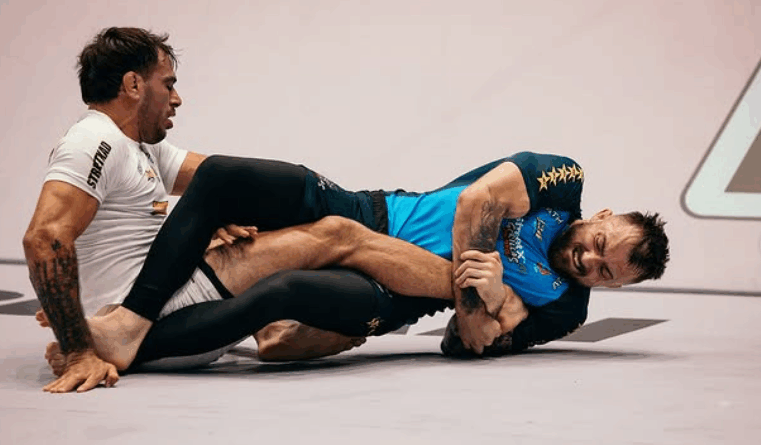
Jiu-Jitsu is as beautiful as it is devestating.
How we learn it, is how we will use it. How we use it, is indicative of ourselves.
Jiu-Jitsu and Language
I’ve always equated the learning process of Jiu-Jitsu as the same way as learning a language. I don’t know how to speak Spanish at all, despite having a Cuban wife. I learn as a child does, one word at a time. My form of speaking Spanish is very elementary. Often, I use the wrong grammar, take forever to formulate the sentences, and make many mistakes in the interim. How often does our Jiu-Jitsu feel this exact way? Learning moves (words), attempting to use them in sequence (sentences), and failing at some point to get the point across or the desired outcome.
There is an odd feeling when learning a language. I can hear a conversation in Spanish, follow the general gist, but have a complete inability to partake in it. The same is true when we look from the outside in on a Jiu-Jitsu round that is way out of our league. We get the general gist of what is going on, what the main idea is, but we miss all the details that make it what it is.
So how do we go from being a toddler in the language of Jiu-Jitsu, saying random words, to being a competent practitioner who can formulate coherent ideas and use them to defeat another competent practitioner?
Well, there is no shortcut. Just like there’s no shortcut that allows you to go from diapers to a PhD overnight. It takes time to learn and grow in Jiu-Jitsu, just like it does in life. In a very real sense, the belt ranking system is just like the growth from toddler to adult (see the attached video for a better explanation)
So what is the best way to learn this odd language? Well, I’ll tell you from experience its not through learning random words and hoping for the best (I’m looking at you, Duolingo). The best way to learn a new language, to learn Jiu-Jitsu, is to be immersed in the culture through conversation.
Conversations: The Basis of Learning Information
We can really only learn how to speak when we have someone to bounce the words off of. If you were to lock someone in a room with no contact and told them to learn the language, they wouldn’t be able to do so effectively. The key is this: YOU CANNOT LEARN IN A VACUUM. You must have someone to juxtapose ideas with.
I think that this idea of conversation can be applied directly to drilling. In fact, this is my primary method of drilling techniques. The language of Jiu-Jitsu is a language of replies. So when I am working in a given position, I want to know what their reply is. The cool part about this style of drilling is that it is much more fruitful than static drilling and more engaging for both parties. Static drilling is generally a monologue, and we all know how enjoyable conversations are with someone who doesn’t let us reply or talk back to them. Conversational drilling is different in that it is a low-stakes dialogue. Allow me to give an example.
I enter the armbar → I ask my partner what their reaction would be based on the scenario → They communicate that to me → I reset back in the armbar → I attempt to find an answer to their reaction → Rinse and repeat
Jiu-Jitsu is a martial art of pattern recognition. The difference between someone who is okay at Jiu-Jitsu and excellent at it is the ability to understand the patterns that arise in given scenarios. What better way to understand these patterns than to have someone present them to you under minimal resistance so you can figure out how to combat them.
If you’ve ever drilled with me, you know this is how I always drill. I go to a given position and ask, “What would you do from here?” The cool part is that everyone gives a different answer, which gives me more problems to solve.
Just like a toddler first learning how to speak and engage in conversation, it is quite awkward. We don’t know what we would do in X situation; we don’t know what the position even is. We must push through this awkwardness if we want to achieve meaningful conversation. A true conversation provides us with meaningful information. Small talk provides us with little else than niceties. We want those meaningful conversations not only in our relationships and friendships, but also in our training. We need someone to juxtapose ideas with. Why? Because without another willing body, we can’t even do Jiu-Jitsu in the first place.
Debating: The Clash of Opposing Ideas to Find a Victor
Once we have garnered enough information, we will start to form theories and ideas. Everyone alive long enough has opinions, ideas, and theories about a variety of different things. However, often these ideas are never combated or pushed back against. Why is there so much discourse in today’s age? Because no one is willing to engage in a formal and cordial debate on opposing ideas. This is because the idea of a debate, in today’s age, is correlated with a complete attack on one’s persona, an argument. Debating is not an argument. It is through debating that we learn where our lapses in thought are, where we are correct, and where we are incorrect. Without someone to push back on our ideas, we will go through life in a very prideful way.
This is how we should approach rolling and competition. The live component of Jiu-Jitsu is simply us debating with our opponent. What is the topic of our debate? It is a conflict between two opposing theories or ideas of Jiu-Jitsu. I believe that X version of Jiu-Jitsu works, you believe Y version of Jiu-Jitsu works. We engage in combat to figure out which version wins. If ours loses, we go back to the drawing board to gain more information.
This is not to be confused with arguing, where there are ad hominem attacks and other emotion-driven logical fallacies. To lose control of our emotions and our theories leads to a total loss in every realm. We lose the round, our ideas, and become blind to the fact that the person in front of us is a person who simply has a different idea than us. The moment a debate gets heated, there is no winning party.
One of my main pastimes is actually watching debates, primarily theology debates. I love listening to opposing arguments to my currently held beliefs because it challenges me to find answers or to concede my position. The same is true of Jiu-Jitsu. When I come face-to-face with a challenge in the form of someone’s Jiu-Jitsu, it forces me to delve deeper into my position and my viewpoint of it. Debating in the form of live training or competition is absolutely pivotal to our development. If we go into a training session or tournament with no concept of what it is we are doing, we will be spinning our wheels and not getting any better. How does this look on a day-to-day basis?
I have a theory on pinning → I converse with a drilling partner on their reactions → I acquire information and apply it
I attempt to employ this theory in a round → I am unable to pin my opponent → They catch a kimura on me, leading to me being submitted
I ask them questions after the round → I have them place me in the kimure → I attempt to find an answer to this puzzle
As you can see, there is a constant switch between Conversation and Debating. I do this process dozens of times in a training session. I’m constantly taking in information and trying to formulate ideas and theories around it. In general, I follow this outline within a training session.
Start Round → Conversation → Debate → Debrief and Learn → New Round
I believe this is the secret sauce to getting really good, really fast. Why? Because we are more focused on information and formulating our ideas around it than we are with the outcome. If I’m more focused on the theories and processes (Debating) that play a part in winning a round, I am more likely to win over the long term. If I simply focus on winning (Arguing), I may win the battle, but I’ll lose the war. In this scenario, I’ll miss all the crucial information along the way that could ensure future and continued success.
Closing Remarks
It takes a long time to learn Jiu-Jitsu. At times, it is a frustrating process where we feel we aren’t learning anything. We must take the approach of learning Jiu-Jitsu as a child does learning a language. One word at a time. It takes a long time to learn, but it’s a worthwhile endeavor. Anything that takes a long time to do is always worthwhile.
