
An Ordinating Aim
“I appeal to you, therefore, brothers and sisters, by the mercies of God, to present your bodies as a living sacrifice, holy and acceptable to God, which is your reasonable worship.”
Romans 12:1
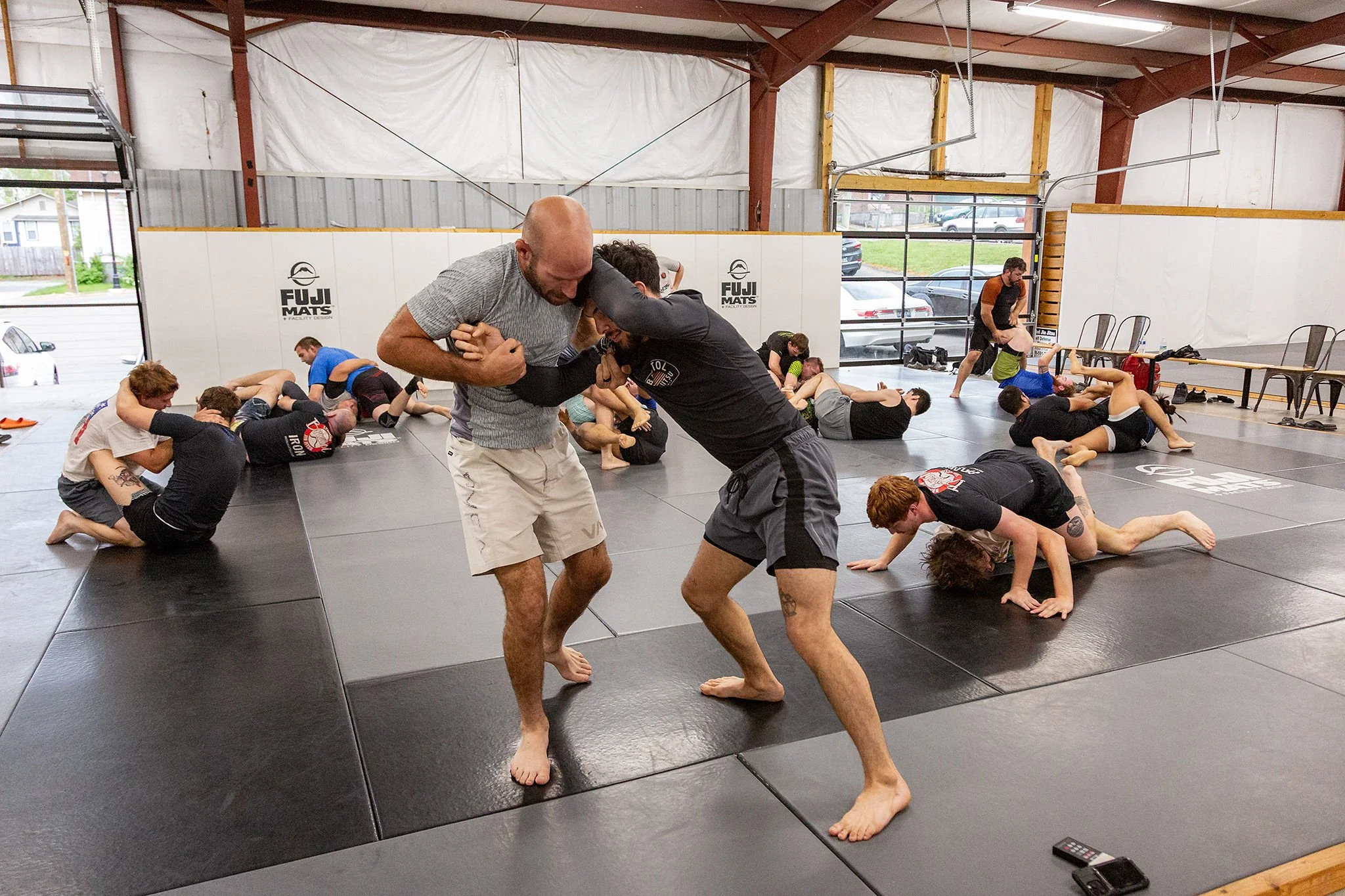
As a child, I bugged my dad constantly with one singular question. ‘Why?’. I asked this in regard to almost any situation, and I’m sure my dad regretted teaching me this word many times. I guess I haven’t changed much, because now I bother everyone with this question of ‘Why’. To me, this question has guided almost every decision and idea I’ve ever had.
Today, we are going to be applying this perpetual question of ‘why?’ to training. Why do we train? Or at least, why should we train? We’ve all heard the science and the influencers telling us how important exercise and eating healthy are for our health and longevity. Logically, if we know this is the case, every single person in the world should be exercising to some degree every single day. Yet, despite this concrete knowledge, only 24% of Americans exercise. So it isn’t a far cry to say that this logical and scientific reasoning doesn’t establish in us the desire to do right by ourselves and to treat our future selves with reverence and respect.
Many people say they don’t like exercising. Many people also say they don’t like sitting on the couch doomscrolling for 6 hours, but they do that anyways. It’s as St. Paul says in the Letter to the Romans, “For I do not do the good I want, and the evil I do not want is what I do.” (Romans 7:19). This is a story as old as time. We want to do the right things for ourselves, but cannot find the pull or motivation to either initiate action or sustain action over time. So simply saying, “It’s good for you to train or exercise, therefore you should do it.” holds little water in our minds as a valid foundation of motivation.
Here I will wager an answer to this perplexing question. I have searched for many years within myself and within books and podcasts to find an answer. At times, I felt like I had THE answer, but it proved not to be sustainable. Then, I would move on to another answer. This time, I swore that finally, I had found THE answer, yet it again proved unsustainable. After doing this a couple of hundred times over almost a decade of training, I will tell you what I wager the answer to be now, but this, too, with time could prove incorrect.
Jordan Peterson in his book “We Who Wrestle With God”, poses the essential idea of having an Ordinating Aim. A north star in which all our travels and hardships are pointed towards as we move forward. This north star is an unchanging ideal or vision that we may have, that when the day gets dark and cloudy, will shine through the darkness to keep our path illuminated. Okay, enough poetic language. What is a good Ordinating Aim? It isn’t the logical, “Because it’s good for me”, as we laid out before so we must find something else. There must be something outside of ourselves, or even better, deeper within our souls, that must be guiding our actions, especially when it comes to training. So, when it comes to training for longevity, what should be our ‘Why?’, our Ordinating Aim, our North Star?
Ordinating Aim for Non-Believers
I’ve only been a Christian for about two years. My previous 23 years of living I was a self-proclaimed agnostic. So I will speak to those who may not have belief or faith, so as to represent both parties and what I believe can be an Ordinating Aim for all people regardless of belief.
For the longest time in my early days, my Ordinating Aim came from a place of loss and negativity. I lost my brother at 16 years old and placed all my grief, anger, and sadness into extremely hard training. For many, many years, training was my therapy to help cope with the cruelties of the world. When I went to train, it wasn’t because it was good for me; it was because I was placing within training all of my negative emotions (of which my temperament is very partial towards). I saw it as my duty to train. My brother was a very gifted athlete, and I felt it was unfair that his life was taken away at the age of 24. I thought the only fair thing I could do was to train him, since he no longer had that ability. Every day in training, I was running from something, some negative emotion. Every day I was attempting to transmute the negative emotions into positive output (skill development, helping others, and discipline).
All of this to say, my Ordinating Aim was both outside of myself and within myself. On one hand, I was dealing with what I felt at the time was an unfair hand, and in an attempt to make it fair, I devoted myself to training. On the other hand, within myself, I felt so many negative emotions that I had to find an outlet to get them out of me. Half of my training sessions, I didn’t want to go to, but there was something outside of myself I felt obligated to do right by. Many times I wanted to quit training altogether, but I knew that mentally that would be a worse fate. In a way, I trapped myself into training with my Ordinating Aim. I couldn’t leave, even if I wanted to. This kept me very consistent. However, I will say I did not have the healthiest relationship with training or with emotion in this time. But, without training, I don’t even want to think about where I would be right now. It was the perfect outlet for me to escape the wiles of the world, and to put my aching heart into something that could, for a time, make me feel somewhat better.
Ordinating Aim for Believers
However, this mindset in regards to training did little but stave away the negative emotions I did have deep within me. Yes, I was good at Jiu-Jitsu, but I was still miserable anytime I wasn’t on the mats. At the time I thought the solution was just to always be on the mats, but nothing changed.

Then two years ago, I found the Lord, and ever since then I’ve been trying to turn away from my old mind and life towards one that is better not only for myself, but for my family and friends. This left me in a weird position where now my original Ordinating Aim wasn’t helping me, it was actively keeping me away from the life that I was now striving for. My North Star of Grief had proved to lead me nowhere except in circles. This was until I found the Star of Bethlehem to guide me, like it did the Three Magi (Matthew 2:1-12)
So this brings me to my current answer, and it was the verse at the beginning of this article.
Why should we train?
Because by the mercies of God we have been saved, and we ought to present our bodies as a living sacrifice to Him who saved us, and this is reasonable worship.
Our bodies are a gift from God, not to be misused or mistreated. Our salvation is a gift from God, and this fact should be kept at the forefront of all our actions. Because we have been saved by the cross, it is only logical and reasonable that we should worship the Lord through all actions of body, mind and soul.
This is a very long-winded answer to what seems like a rather simple question. But it is a question I have always wrestled with. I don’t train to run from anything now. I train because I’m running toward the finish line with an imperishable wreath (1 Corinthians 9:25). It seems only right to me that if my Lord died on the cross for my salvation, that all that I do should be ordinated towards that fact. So nowadays, when I train, it is an offering to He who deserves offering. I train because God has gifted me a body and abilities unique to my own person. To misuse these gifts would be an affront to God Himself.
“For you were bought with a price; therefore glorify God with your body.”
1 Corinthians 6:20
The Bottom Line
The answer to ‘Why do I train’ is going to be different for every individual based upon their individual circumstances. However, the underlying idea remains the same.
Your North Star needs to be outside of yourself
And your Ordinating Aim needs to come from deep within yourself
This is how you stay motivated for anything in life, not just training. The hard part is it’s up to you to do enough introspection to figure out what that Ordinating Aim for your life is going to be.
The bottom line is you NEED an Ordinating Aim to go through life. If you do not have one, you will find yourself living a life the younger you would have never wanted. Do right by yourself, and find your North Star. When the storms come, and the night falls (which it inevitably will) you’ll have some semblance of light to lead you along the path. Without that light, you’ll get lost. When you get lost, no amount of running, or hiding will get you any closer to where you want to go.
